
Making Crepes with Kids: Jobs by Age, Safety and an Easy Batter
Crepes are one of the best things to cook with children. The batter is just a few ingredients stirred in a bowl, every crepe takes about a minute, and the fun part, choosing what goes inside, is completely theirs. It’s also a good first lesson in cooking at the stove, because the steps are short and the result is right in front of you.
Here’s a forgiving batter made for small cooks, what children can do at each age, how to keep everyone safe around a hot pan, and a toppings bar that lets kids build their own.
A batter made for kids
This batter is lightly sweet and a touch thicker than a classic French one. That makes it easier to pour, less likely to tear when it’s flipped, and sturdy enough for a 5-year-old to spread and roll. If you’d rather skip the whisking, put everything in a blender for 20 seconds, as in Blender Crepes. It’s a great job for a child who likes pushing buttons.
Jobs by age
Every child is different, so treat these as starting points. Stay close, and let them do more as they show they’re ready.
Ages 2 to 4
- Stir the dry ingredients with a whisk or spoon.
- Pour in milk you’ve already measured into a cup.
- Wash berries in a colander.
- Spread a little chocolate spread or yogurt on a cooled crepe with a butter knife or spoon.
- Sprinkle sugar, cinnamon or sprinkles.
Ages 5 to 7
- Measure flour and sugar with measuring cups and level them off.
- Crack eggs into a small cup (have a spoon ready for shells).
- Slice bananas and strawberries with a child-safe knife.
- Fill and roll their own crepes, and set out the toppings bar.
Ages 8 to 10
- Make the whole batter on their own, reading the recipe.
- Pour batter into the pan and swirl it, with an adult holding the handle or standing right beside them at first.
- Flip crepes with a spatula once they’re comfortable at the stove.
Ages 11 and up
- Cook a full batch with an adult nearby, and help younger siblings with their jobs.
- Try a new filling or a savory crepe, like ham and cheese melted right in the pan.
Safety at the stove
A crepe pan is hot, open and at eye level for a small child, so a few habits make all the difference.
- One cook at the stove. Younger helpers work at the table or counter, away from the burner. Only the child who is cooking stands at the stove, with an adult.
- Turn the handle in. Keep the pan handle turned toward the back of the stove so it can’t be bumped.
- Use a sturdy step. If a child needs a stool to reach, use a stable one with a wide base, not a chair.
- Spatula, not fingers. Adults often flip crepes by pinching the edge. Kids should always use a thin spatula. A long wooden one like the one in this crepe spreader and spatula kit keeps hands well away from the pan.
- Sleeves up, hair back. Roll up loose sleeves and tie back long hair.
- Medium heat only. Crepes don’t need high heat, and a pan on medium is more forgiving if a crepe is left a little too long.
- Cool before handling. Let crepes rest on the plate for a minute before little hands fill them.
If you’re new to crepes yourself, Crepes for Beginners and Mastering the Art of Flipping cover the basics before you bring in helpers.
A toppings bar for kids
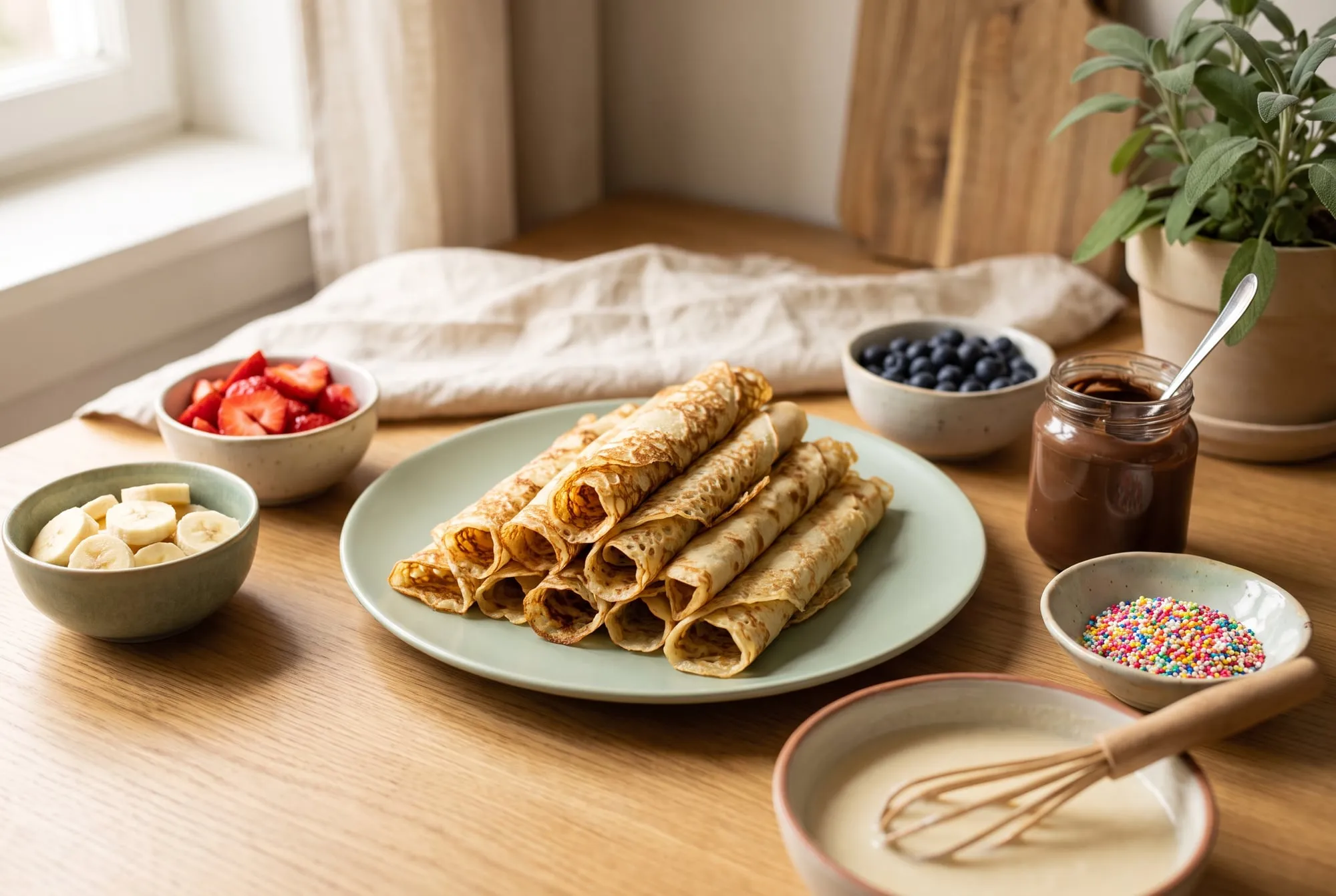
Set the toppings out in small bowls with spoons, and let each child build their own. For 4 children, these amounts are plenty:
- Fruit: 1 cup (150 g) sliced strawberries, 1 cup (150 g) blueberries, 2 bananas sliced just before serving
- Spreads: chocolate-hazelnut spread, a jar of jam, peanut or sunflower seed butter
- Creamy: 1 cup (240 g) vanilla or plain yogurt, or whipped cream
- Sprinkles: cinnamon sugar, a little powdered sugar, mini chocolate chips
- Savory: sliced ham, shredded cheese, scrambled eggs
Rolling is the easiest fold for small hands: spread a thin layer, add a line of fruit, and roll it up like a tube. For favorite combinations, see Nutella Banana Crepes. For a birthday or sleepover, How to Host a Crepe Party scales the whole thing up.
Crepes for babies and toddlers
Plain crepes are soft and easy to tear into pieces, which is why many families serve them to toddlers. A few cautious points:
- Watch for allergens. Crepes contain egg, milk and wheat, which are among the most common food allergens in children. If your child hasn’t had these foods yet, follow your pediatrician’s advice on introducing them, and offer crepes only once they’re known to be tolerated.
- Cut to a safe size. Cut crepes into small pieces or thin strips that suit your child’s age and chewing, and stay with them while they eat. Cut round fruit like grapes and blueberries into small pieces too, and leave out whole nuts.
- No honey under 12 months. Honey should not be given to babies younger than 1 year.
- Keep it plain. Leave the sugar out of the batter for little ones, and use mashed banana or fruit instead of sweet spreads.
For anything specific to your child, check with your pediatrician.
For toddlers who already eat eggs, the flour-free 2-Ingredient Banana Crepes are another soft, naturally sweet option.
Frequently asked questions
At what age can kids help make crepes?
Children as young as 2 or 3 can help stir, pour pre-measured milk and add toppings. Most kids can start cooking crepes at the stove, with an adult right beside them, somewhere around 8 to 10 years old, depending on the child.
Can toddlers eat crepes?
Crepes are soft and easy to cut, but they contain egg, milk and wheat, three common food allergens. Introduce those foods first as your pediatrician advises, cut crepes into small pieces, and skip honey for babies under 12 months.
How do I make crepes less sweet for kids?
Leave the sugar out of the batter. The crepes still taste good, and the toppings, like fruit, yogurt or a thin layer of chocolate spread, add plenty of sweetness.
You might also like
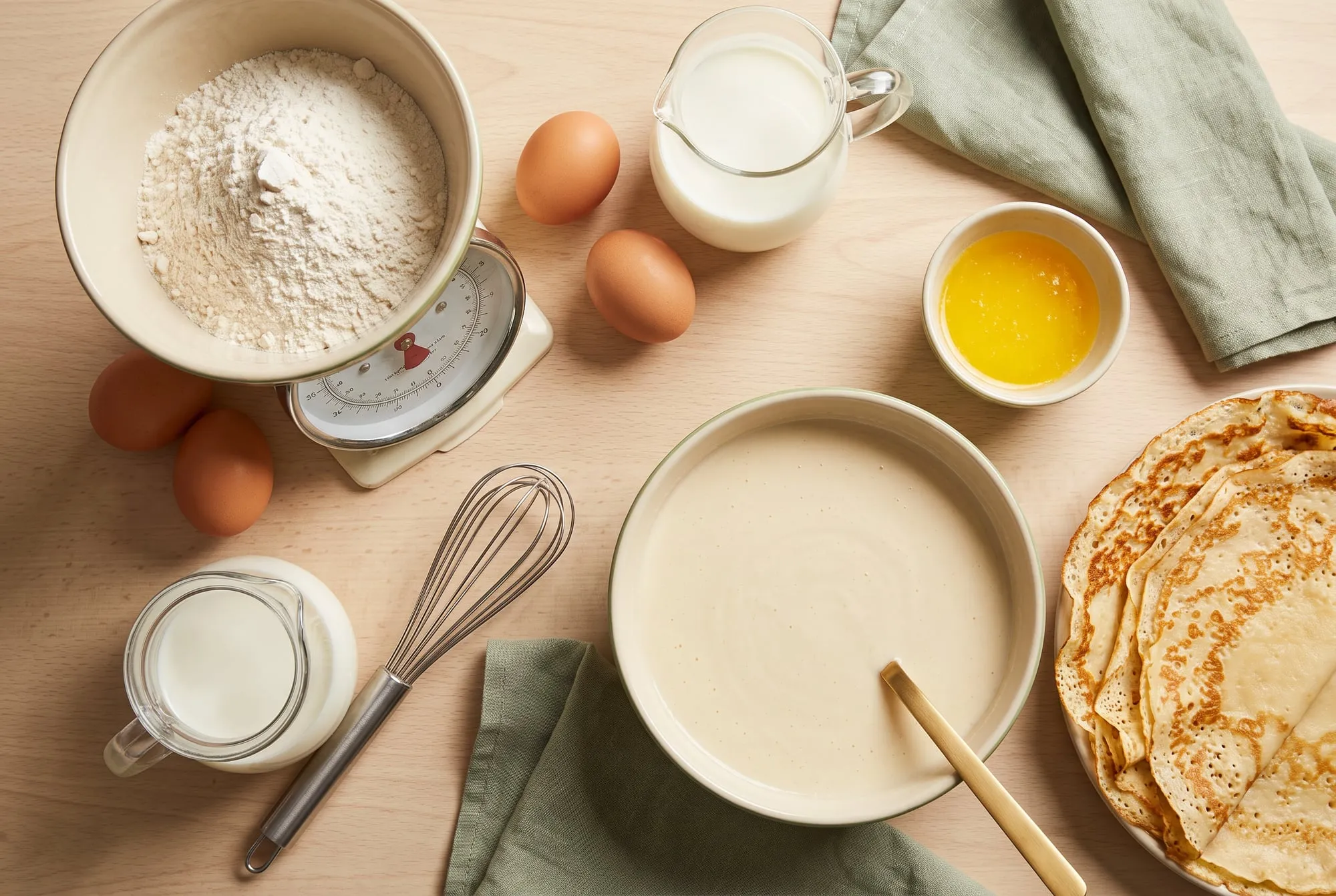
Crepe Batter Ratio: How Much Flour, Eggs and Milk (Cups and Grams)
The crepe batter ratio in cups and grams, a scaling chart from 1 to 4 eggs, how thick crepe batter should be, and how to fix batter that's too thick or thin.
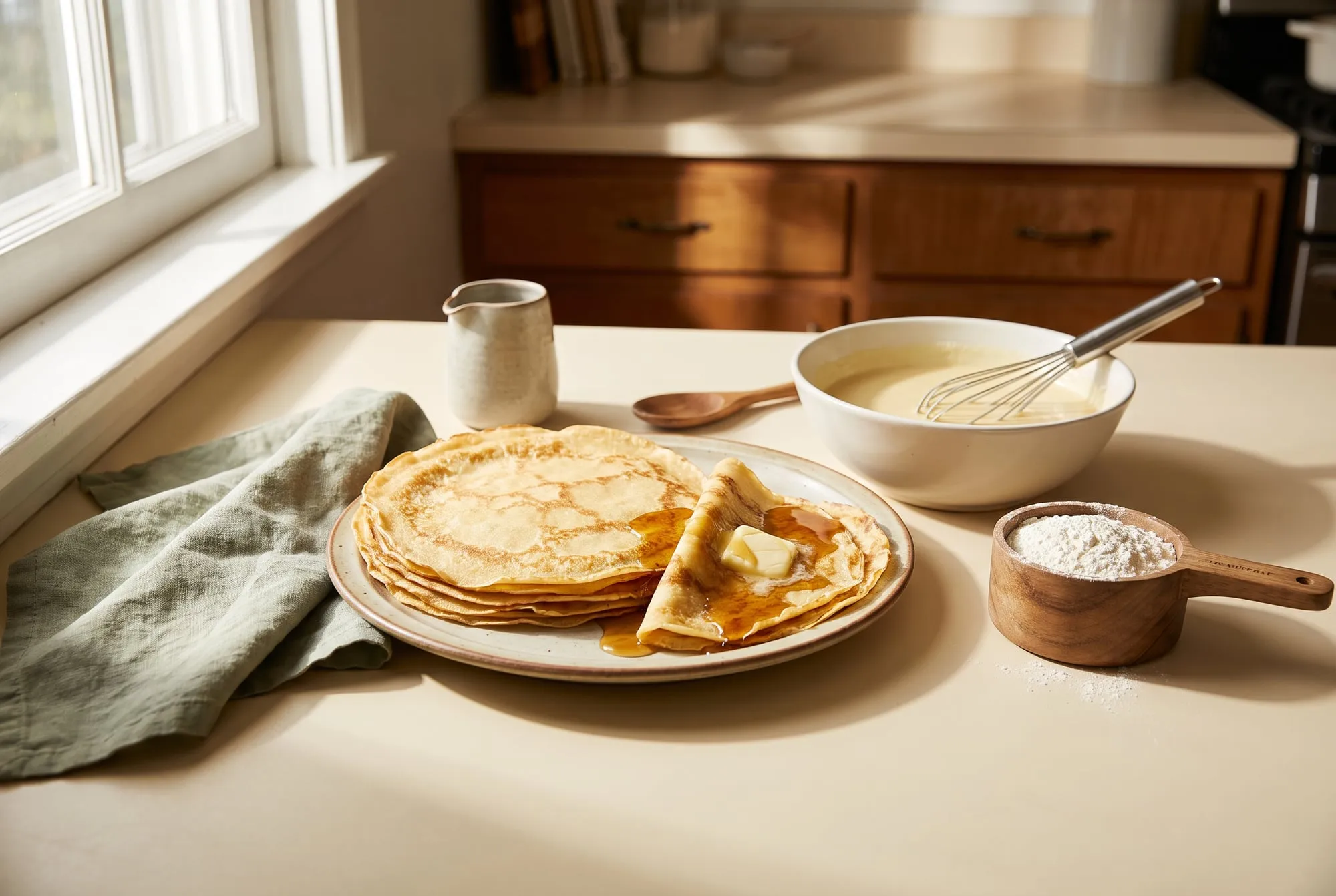
How to Make Crepes with Pancake Mix
Easy pancake mix crepes: whisk 1 cup pancake mix with 1 egg and about 1 cup milk until thin. Ratios for complete and regular mixes, plus tips.
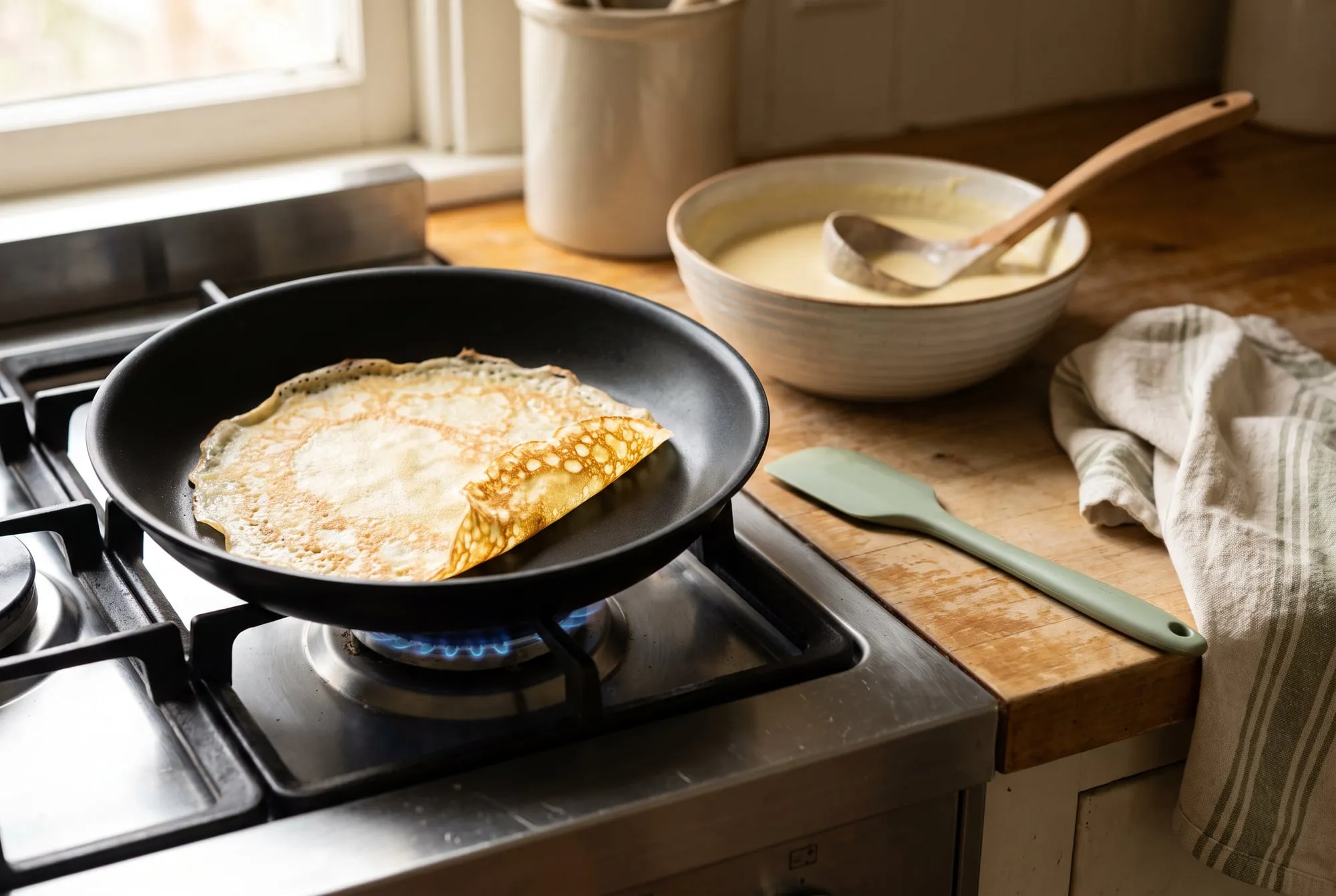
How to Make Crepes Without a Crepe Pan
You don't need a crepe pan. How to make thin crepes in a non-stick, stainless steel or cast-iron skillet, with the swirl technique and a basic recipe.