
Crepe Batter Ratio: How Much Flour, Eggs and Milk (Cups and Grams)
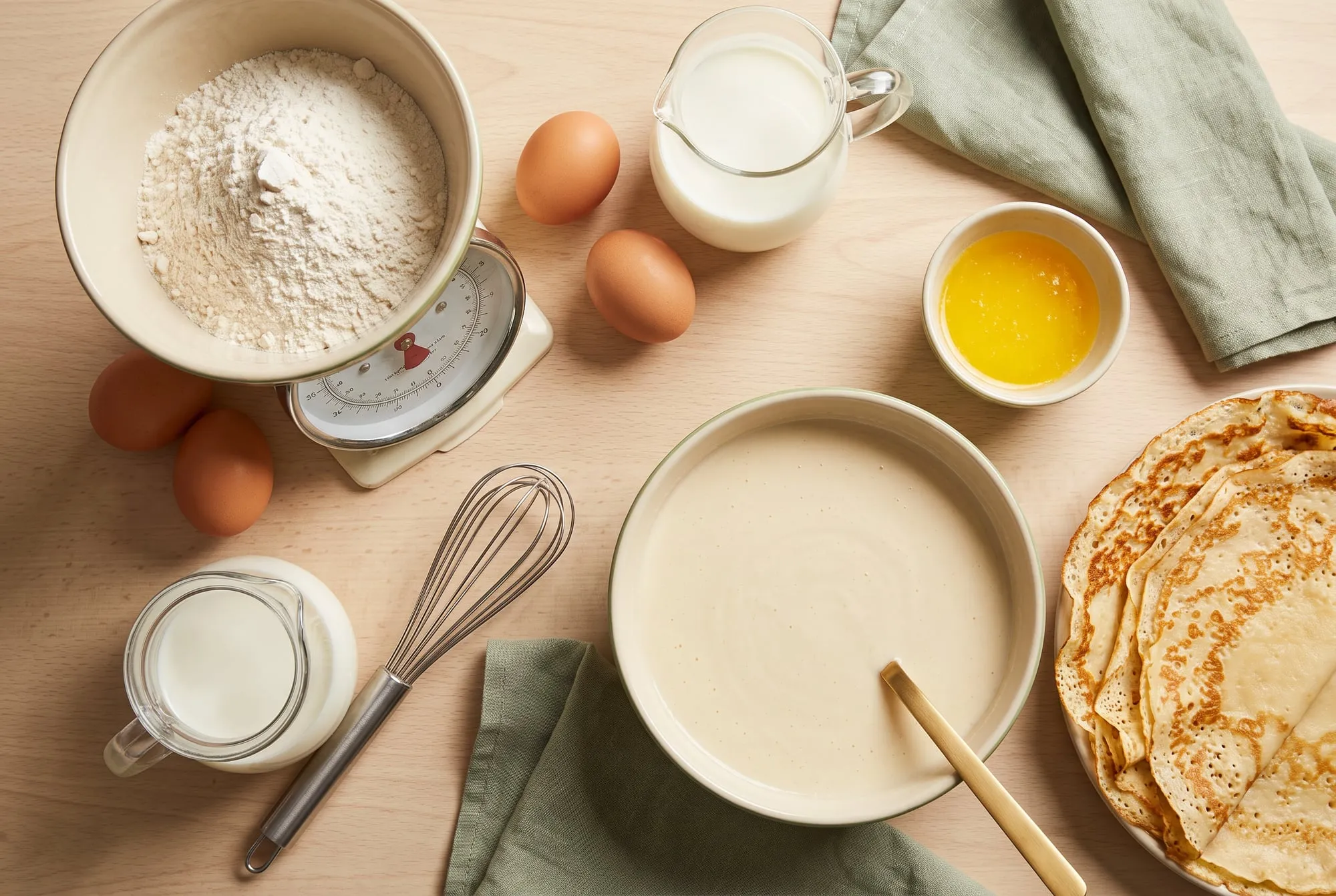
Crepe batter is one of the easiest things to memorize once you know the ratio. Get the proportions right and you can make any amount, from one serving to a crowd, without looking up a recipe.
The crepe batter ratio
By weight: 1 part flour : 1 part egg : 2 1/2 parts milk, plus a little melted butter and salt.
In cups: 1 cup flour : 2 eggs : 1 1/4 cups milk.
In grams, that’s 120 g flour, 2 large eggs (about 100 g without shells) and 300 ml milk, plus 2 tablespoons of melted butter and a pinch of salt. It makes about 10 crepes in an 8- to 9-inch pan.
Scaling chart
| Eggs | Flour | Milk | Melted butter | Makes |
|---|---|---|---|---|
| 1 | 1/2 cup (60 g) | 2/3 cup (150 ml) | 1 tablespoon | about 5 crepes |
| 2 | 1 cup (120 g) | 1 1/4 cups (300 ml) | 2 tablespoons | about 10 crepes |
| 3 | 1 1/2 cups (180 g) | 2 cups (450 ml) | 3 tablespoons | about 15 crepes |
| 4 | 2 cups (240 g) | 2 1/2 cups (600 ml) | 4 tablespoons | about 20 crepes |
Crepe counts are for 8- to 9-inch crepes made with about 1/4 cup of batter each.
Measuring by weight is the most consistent, because a cup of flour can weigh anywhere from 120 to 150 grams depending on how it’s scooped. If you use cups, spoon the flour into the cup and level it off rather than scooping straight from the bag.
How thick should crepe batter be?
The right consistency is like heavy cream: it coats the back of a spoon thinly and pours in a smooth ribbon that disappears back into the bowl almost at once.
- Too thick (like pancake batter): the batter won’t spread before it sets, and the crepes turn out thick and chewy. Whisk in milk 1 tablespoon at a time.
- Too thin (like milk): the crepes are lacy and tear easily. Whisk in flour 1 teaspoon at a time, or add an extra egg yolk.
Batter also thickens as it rests, because the flour absorbs liquid. Check it again before you start cooking.
Common variations on the ratio
- Richer crepes: add an extra egg yolk and an extra tablespoon of butter. This is great for dessert crepes like crêpes Suzette.
- Lighter, more delicate crepes: replace up to a quarter of the milk with water, as in Classic French Crepes.
- Savory crepes: leave out the sugar.
If your crepes still stick, tear or turn rubbery, see Why Are My Crepes Sticking, Rubbery or Tearing?
Frequently asked questions
What is the ratio for crepe batter?
By weight, about 1 part flour to 1 part egg to 2 1/2 parts milk, for example 120 g flour, 2 eggs (about 100 g) and 300 ml milk. In cups, that's 1 cup flour, 2 eggs and 1 1/4 cups milk.
How thick should crepe batter be?
Like heavy cream. It should coat the back of a spoon in a thin layer and pour in a smooth ribbon. If it's like pancake batter, it's too thick.
Can I use water instead of some of the milk?
Yes. Replacing up to a quarter of the milk with water gives slightly thinner, more delicate crepes, and many French recipes do exactly that.
You might also like
How to Make Crepes with Pancake Mix
Easy pancake mix crepes: whisk 1 cup pancake mix with 1 egg and about 1 cup milk until thin. Ratios for complete and regular mixes, plus tips.
Making Crepes with Kids: Jobs by Age, Safety and an Easy Batter
How to make crepes with kids: a forgiving kid-friendly batter, jobs for every age, stove safety, a toppings bar and notes on serving crepes to toddlers.
How to Host a Crepe Party
Everything for a crepe party at home: a big-batch batter for 10 people, a sweet and savory topping list with amounts, a make-ahead timeline and setup tips.