
Why Are My Crepes Sticking, Rubbery or Tearing? How to Fix Them
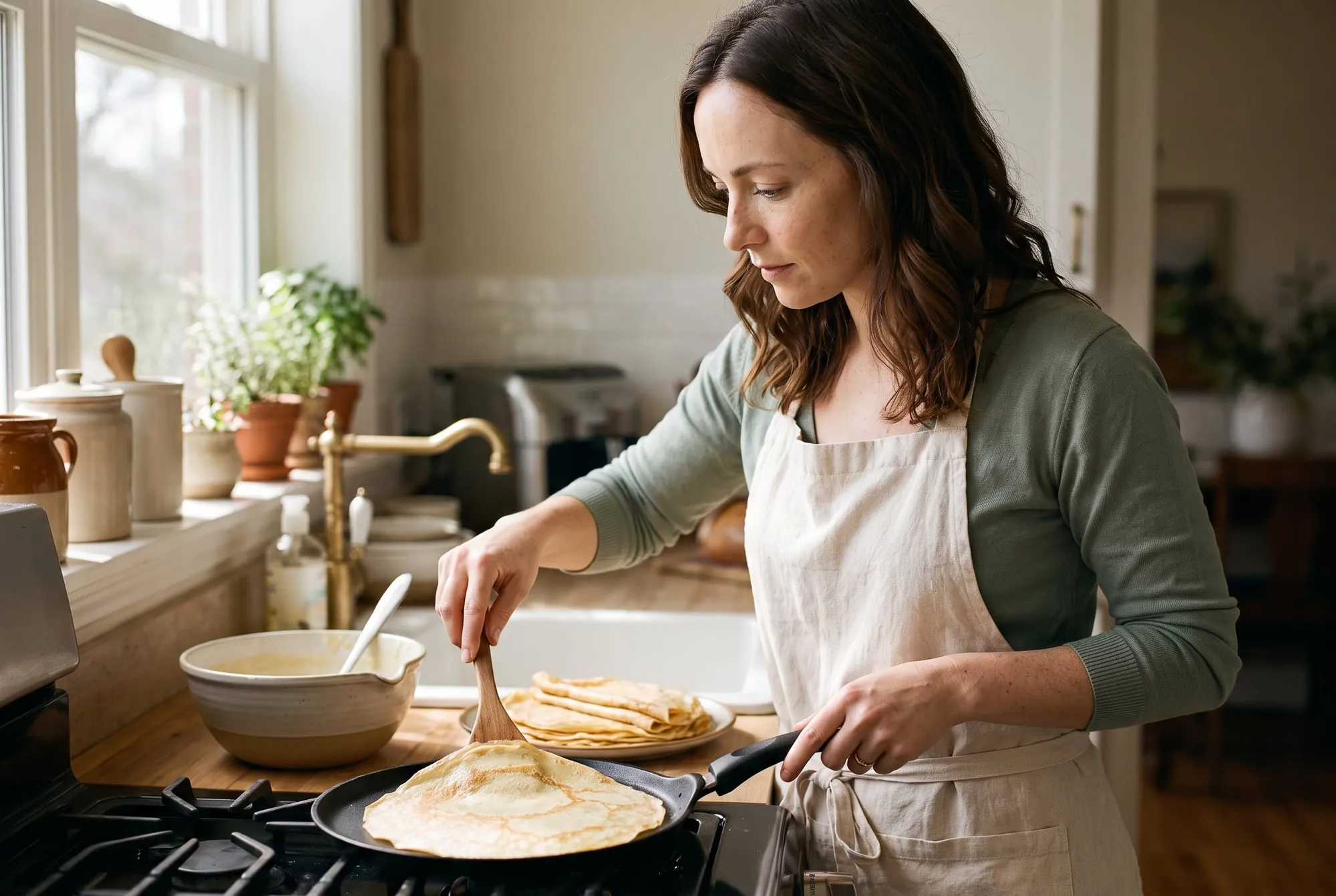
Crepes use only a handful of ingredients, so when something goes wrong, there’s usually one clear cause. Here are the most common crepe problems, what causes them, and how to fix them, starting with the two people search for most: crepes sticking to the pan and crepes turning out rubbery.
Crepes sticking to the pan
Causes: The pan isn’t hot enough, there’s no fat on it, or the non-stick coating is worn. Sugar in the batter can also caramelize and glue the crepe down.
Fixes:
- Preheat over medium heat for a couple of minutes before the first crepe.
- Wipe the pan with a thin film of butter or oil on a paper towel before every few crepes.
- Don’t try to lift the crepe too early. When it’s ready, the edges lift on their own.
- If your pan’s coating is scratched, it’s time for a new one. Any flat non-stick skillet works.
Rubbery or chewy crepes
Causes: The batter was beaten too long, which develops the gluten in the flour. Other causes are too many eggs, a batter that’s too thick, or cooking on heat that’s too low, which dries the crepe out slowly.
Fixes:
- Whisk until just smooth, then let the batter rest for at least 30 minutes so the gluten relaxes.
- Stick to a balanced ratio of about 1 cup of flour to 2 eggs and 1 1/4 cups of milk.
- Thin a thick batter with a little milk or water until it’s like heavy cream.
- Cook over medium heat so each side takes about a minute, not three.
Crepes tearing or falling apart
Causes: Flipping too early, a batter that hasn’t rested, too little egg, or a crepe that’s thinner than the batter can support. Gluten-free and eggless batters are naturally more fragile.
Fixes:
- Wait until the surface looks dry and the edges are golden and lifting before you flip.
- Loosen the whole edge with a thin spatula first, then slide it under the center.
- Rest the batter. It’s the single biggest fix for tearing.
- Use a slightly smaller pan while you get the hang of it.
There’s more detail on the flip itself in Mastering the Art of Flipping.
Thick crepes that taste like pancakes
Causes: Too much batter in the pan, a batter that’s too thick, or baking powder in the recipe.
Fixes: Use about 1/4 cup of batter for a 9- to 10-inch pan, and lift and tilt the pan right away so the batter runs to the edges. Thin the batter if it doesn’t spread before setting. Crepes don’t need any leavening.
Crispy or crunchy crepes
Causes: Too much butter in the pan, which fries the edges, or heat that’s too high.
Fixes: Use just a thin film of fat, and turn the heat down a notch. Lacy, crisp edges are traditional for buckwheat galettes, but wheat crepes should be soft.
Pale crepes that won’t brown
Causes: Low heat, or a batter with no sugar or butter, both of which help browning.
Fixes: Raise the heat slightly, and add a tablespoon of sugar for sweet crepes and a couple of tablespoons of melted butter to the batter.
Bubbles and holes
Causes: Air whisked into the batter, or a pan that’s very hot.
Fixes: Let the batter rest so the bubbles rise and pop, and stir it gently rather than whisking it again before cooking. A few small holes are normal.
Start from a reliable recipe
If problems keep coming back, start from a tested base like the batter in Classic French Crepes or Crepes for Beginners, and change one thing at a time.
Frequently asked questions
Should the first crepe be thrown away?
Not necessarily. The first crepe often comes out uneven because the pan isn't fully heated or has too much butter. Treat it as a test and adjust; it's still perfectly good to eat.
How hot should the pan be for crepes?
Medium heat on most stoves. A drop of water should sizzle and evaporate within a couple of seconds. If the batter sets before you can swirl it, the pan is too hot.
Does crepe batter really need to rest?
It makes a real difference. Resting for at least 30 minutes lets the flour hydrate and the gluten relax, which gives you more tender crepes that are less likely to tear.
You might also like
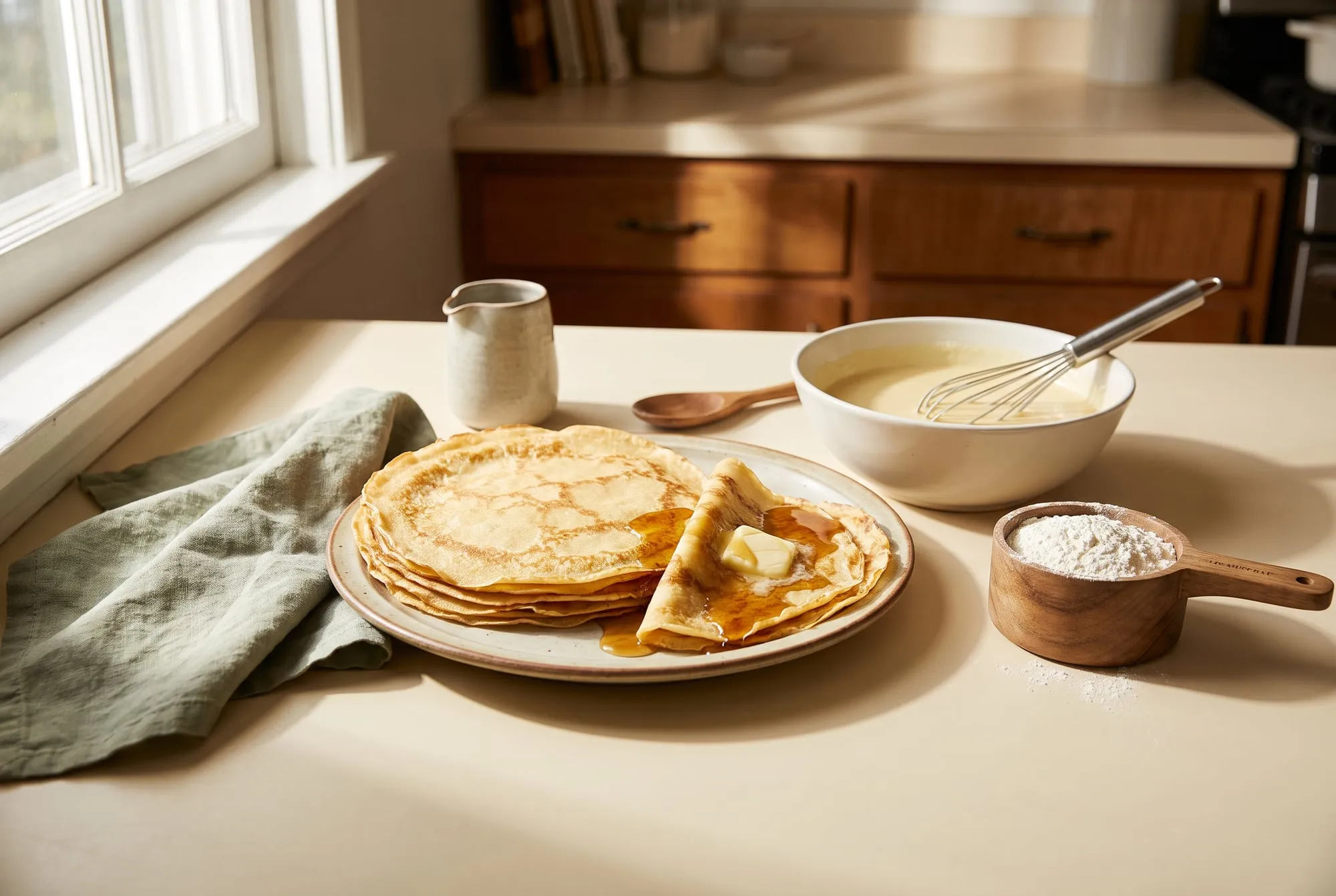
How to Make Crepes with Pancake Mix
Yes, you can make crepes with pancake mix. How to thin the batter, the right ratio for complete and regular mixes, and what to expect from the texture.
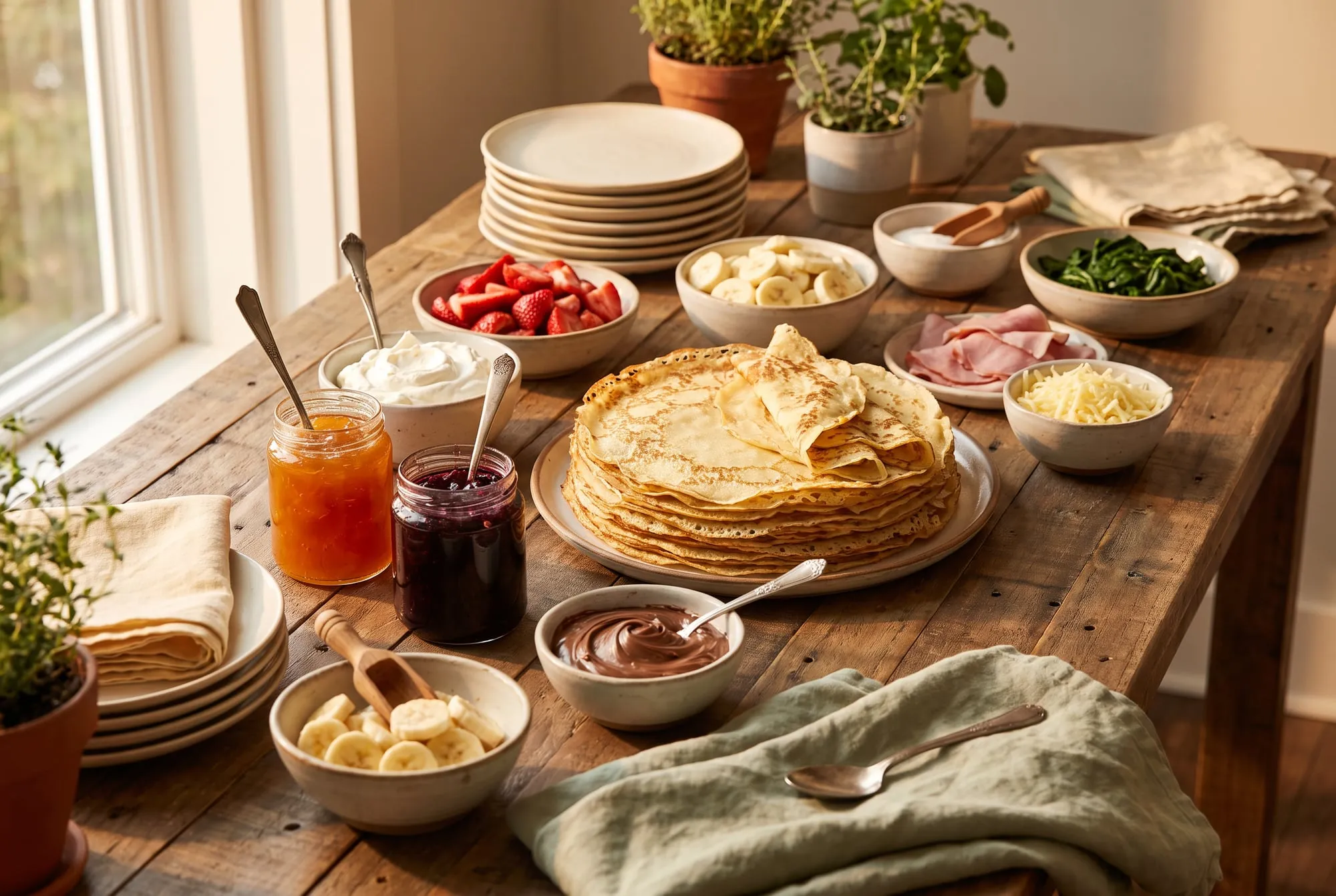
How to Host a Crepe Party
Everything for a crepe party at home: a big-batch batter for 10 people, a sweet and savory topping list with amounts, a make-ahead timeline and setup tips.
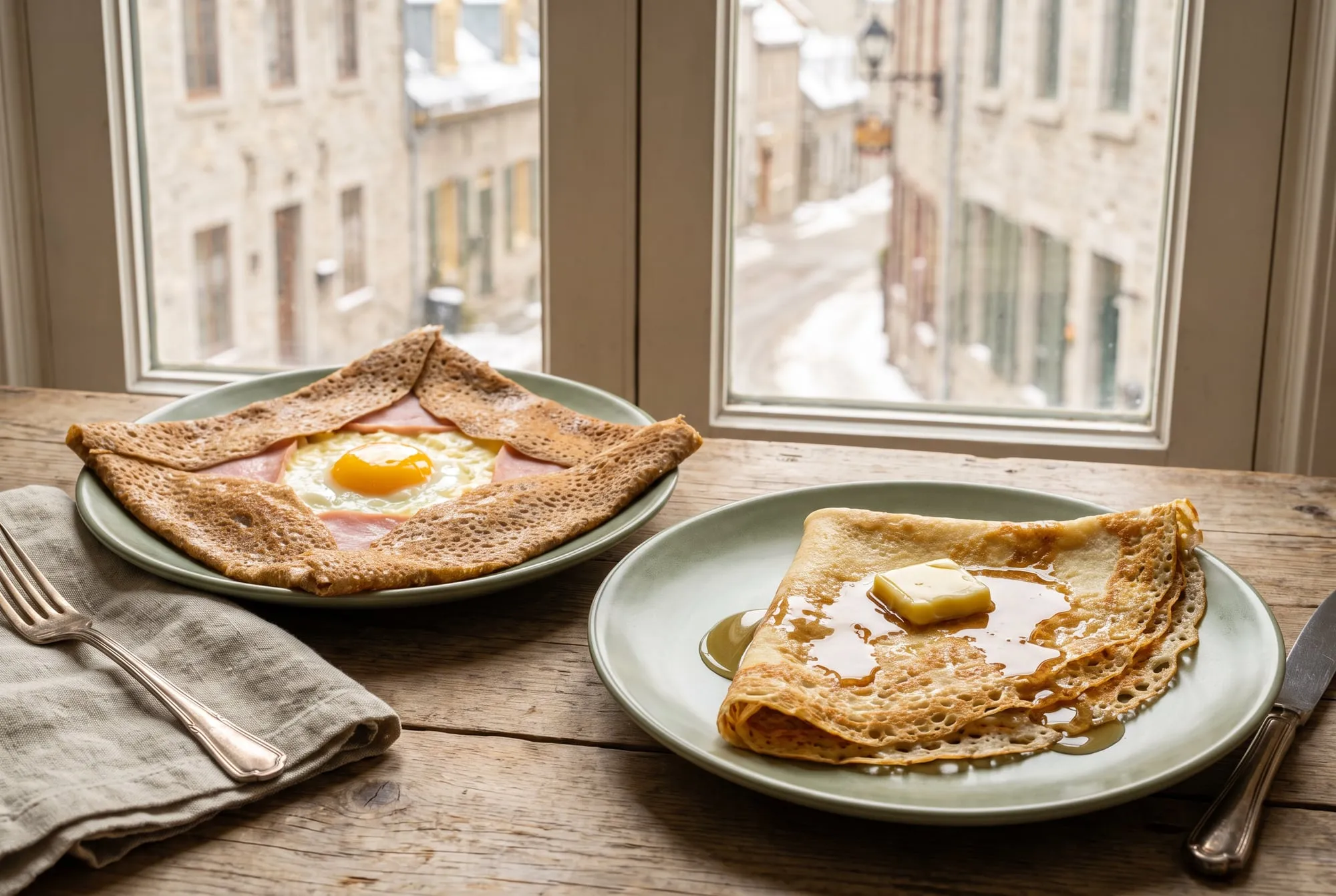
The Best Creperies in Montreal and Quebec City
Where to eat crêpes and buckwheat galettes in Montreal and Quebec City, from Breton crêperies and a gluten-free market counter to classics in the old towns.