
Buckwheat Galettes: How to Make a Galette Complète
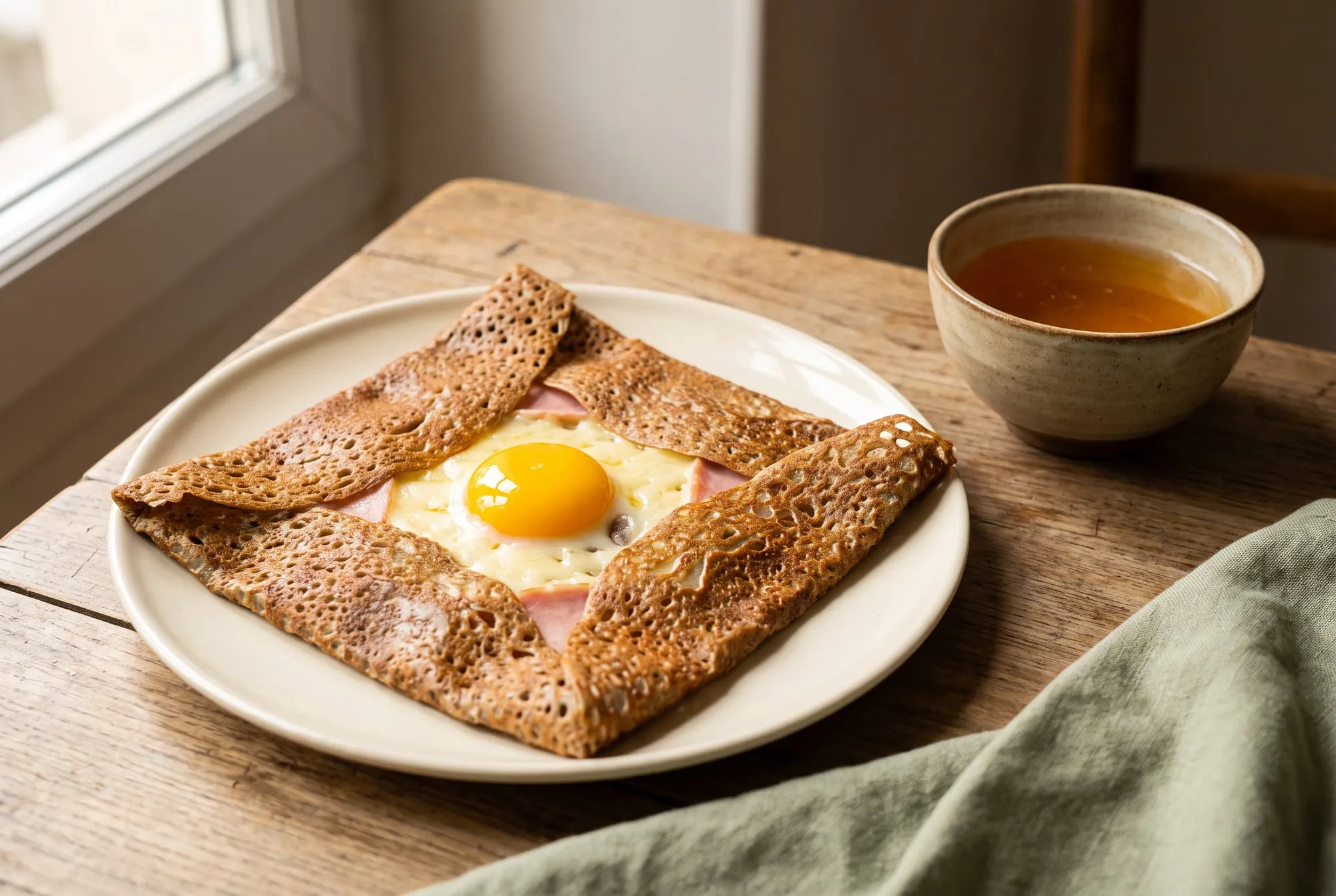
Galettes are the savory crepes of Brittany, in northwest France. They’re made from buckwheat flour, which gives them a deep, nutty flavor, lacy browned edges and a darker color than regular crepes. The most famous version is the galette complète: ham, melted cheese and an egg, folded into a square so the yolk stays in the middle.
The batter needs only buckwheat flour, water, salt and one egg. The one thing you can’t rush is the rest. Buckwheat flour needs time to hydrate, and a batter that has rested for a couple of hours, or overnight, is noticeably easier to cook.
You can read more about where galettes come from in The History of Crepes, and about other regional versions in Crepes Around the World.
Tips for making galettes
- Get the pan hot. Buckwheat batter needs a hotter pan than wheat crepes to set quickly and develop those lacy edges. Medium-high is right for the first side.
- The first one is a test. Use it to adjust the heat and the batter’s thickness.
- Fill on the cooked side. Flip the galette before adding the filling, so the browned side ends up on the outside when you fold it.
- Cover the pan. A lid traps the steam so the egg white sets on top while the galette stays crisp underneath.
- Use a large pan. Galettes are traditionally big. A 10-inch crepe pan or larger leaves room to fold in the four sides.
For more on flipping thin crepes without tearing them, see Mastering the Art of Flipping.
Frequently asked questions
Are buckwheat galettes gluten-free?
This batter uses only buckwheat flour, which contains no gluten. If you need to avoid gluten strictly, buy buckwheat flour labeled gluten-free, since some is milled alongside wheat.
What's the difference between a galette and a crepe?
In Brittany, a galette is a savory crepe made from buckwheat flour and water, while a crêpe is sweet and made from wheat flour, eggs and milk. Outside France the words are often used loosely.
Why does my buckwheat batter tear in the pan?
It's usually too thick or the pan isn't hot enough. Thin the batter with a spoonful of water at a time, and make sure the pan is properly hot before the first galette goes in.
You might also like
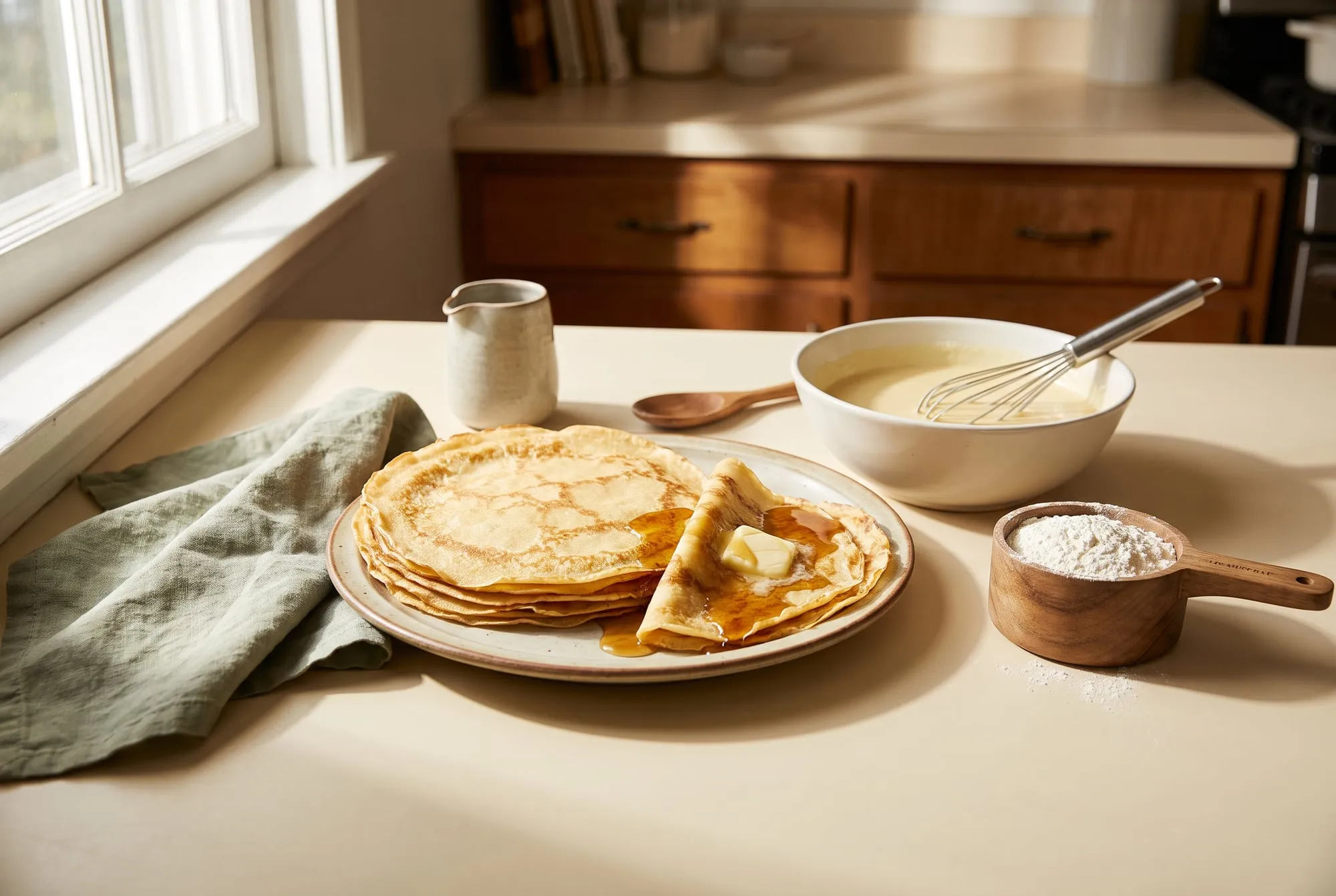
How to Make Crepes with Pancake Mix
Yes, you can make crepes with pancake mix. How to thin the batter, the right ratio for complete and regular mixes, and what to expect from the texture.
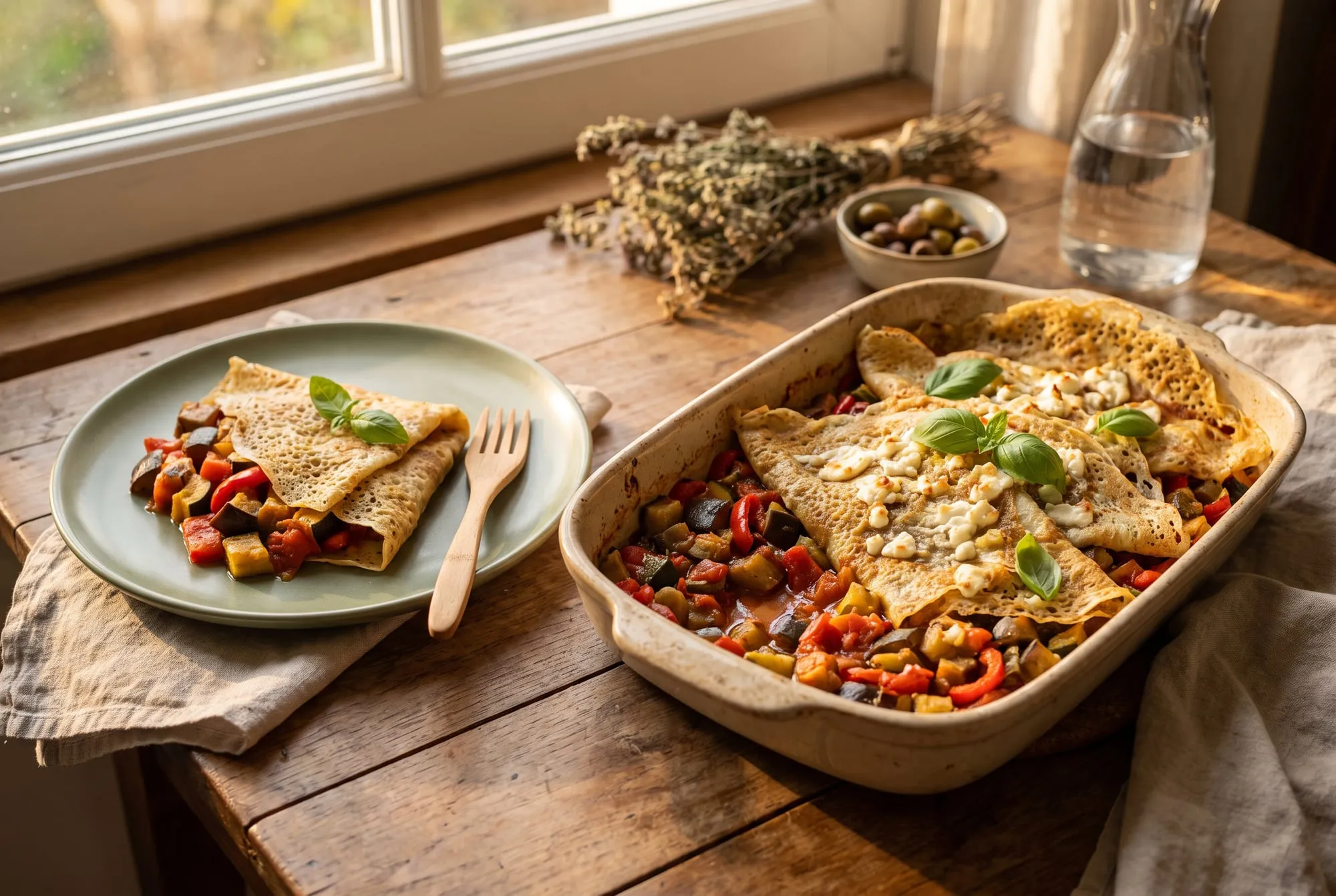
Ratatouille Crepes with Goat Cheese
Savory herb crepes filled with a late-summer ratatouille of eggplant, zucchini, pepper and tomato, baked with goat cheese. Exact quantities and make-ahead tips.
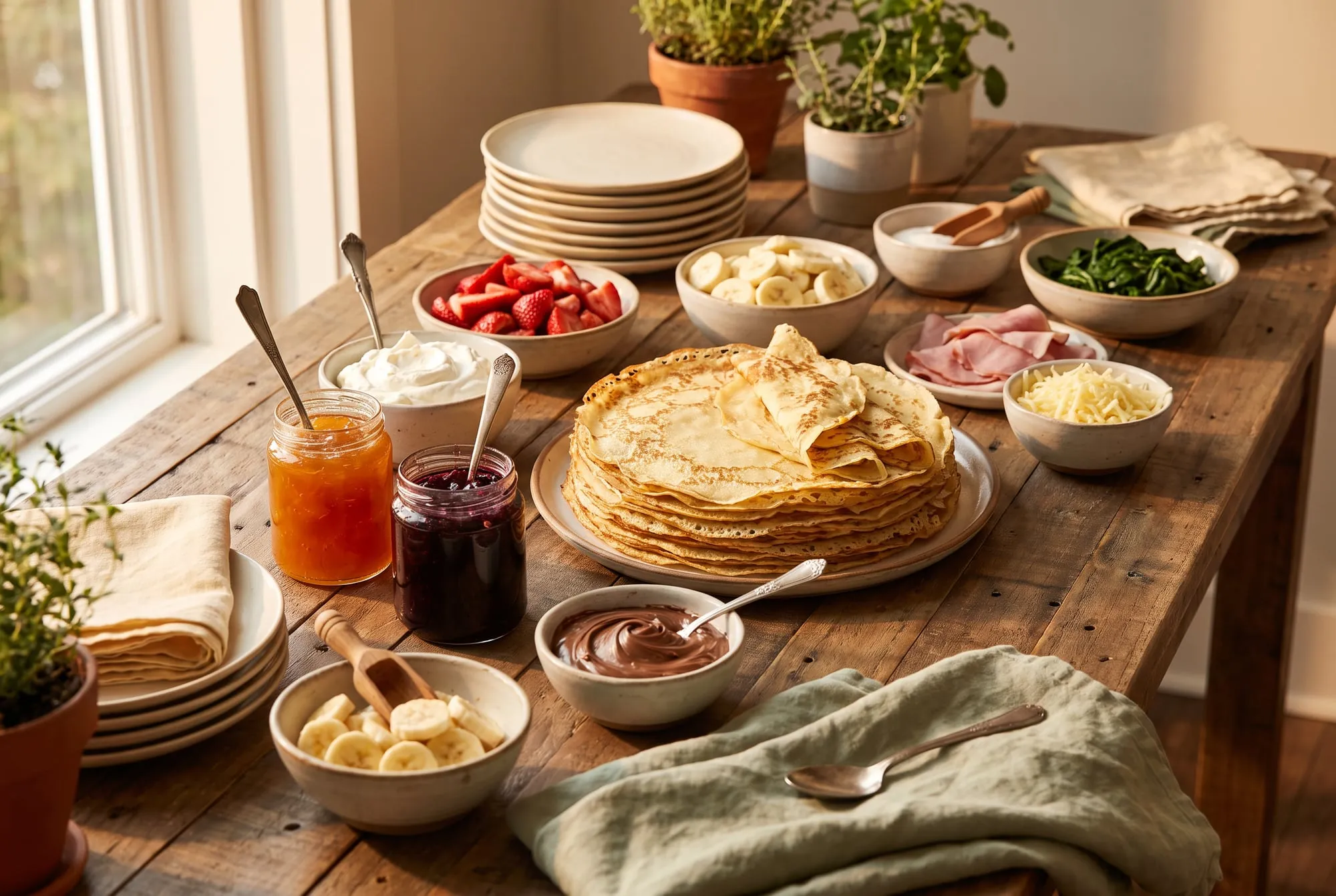
How to Host a Crepe Party
Everything for a crepe party at home: a big-batch batter for 10 people, a sweet and savory topping list with amounts, a make-ahead timeline and setup tips.