
How to Make Crepes Without a Crepe Pan
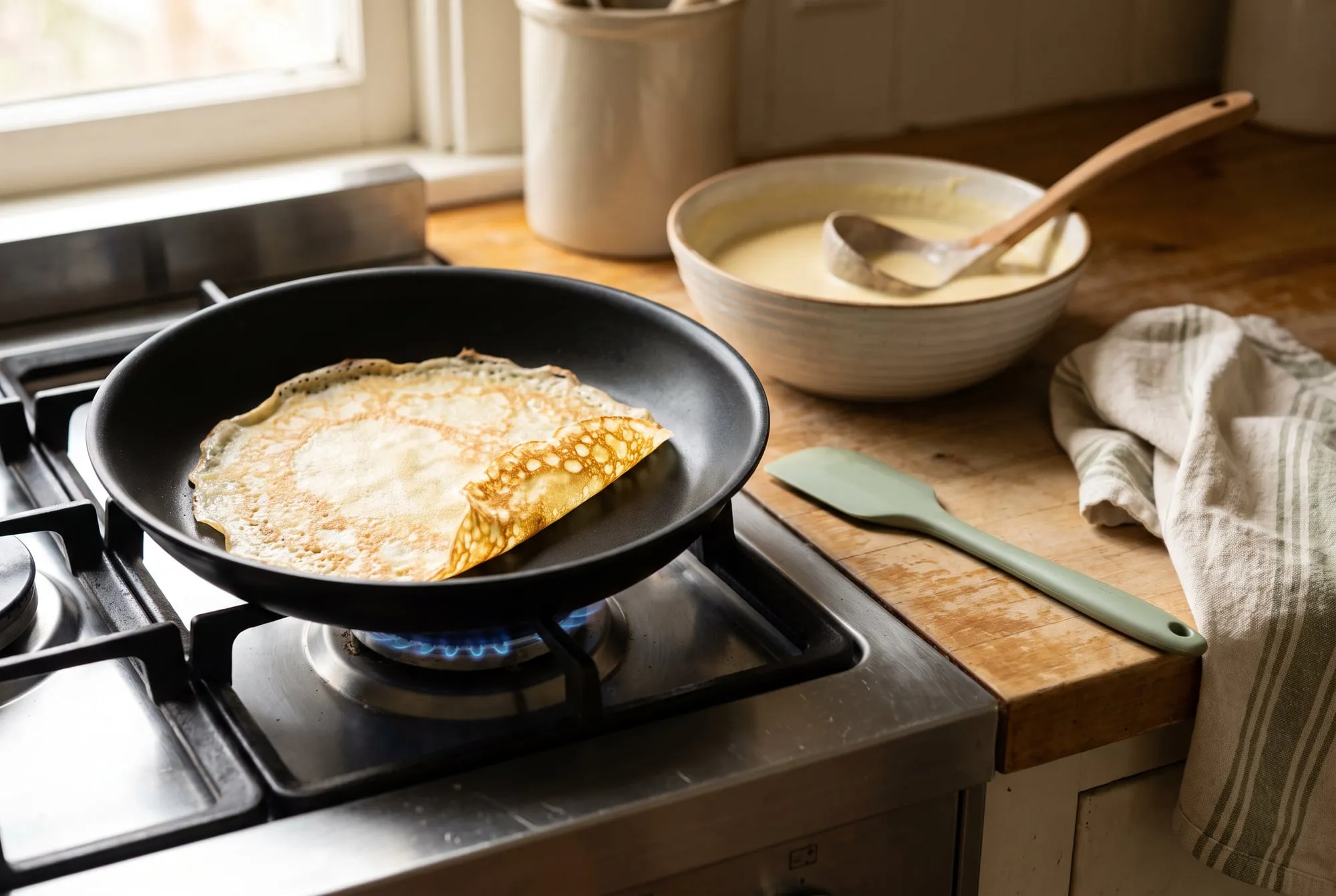
A crepe pan is nice to have, but it’s just a flat, low-sided pan that heats evenly. Most kitchens already have something that works. A good non-stick skillet makes crepes every bit as thin as a crepe pan, and stainless steel and cast iron work too once you know how to handle them.
The things that matter are a flat base about 8 to 10 inches across, low or sloped sides you can get a spatula over, and steady medium heat. Here’s how to make crepes with what you have.
Which pan to use
Non-stick skillet (the easiest)
A non-stick skillet is the best substitute for a crepe pan. It’s light enough to lift and swirl with one hand, and crepes release with very little fat. Use medium heat, since high heat damages non-stick coatings and browns crepes before they cook through. If the coating is scratched or worn, crepes will stick in those spots.
Stainless steel skillet
Stainless steel works, but it’s the least forgiving. The secret is heat and fat:
- Preheat over medium heat for 3 to 4 minutes. Flick in a few drops of water. When they bead up and skitter across the pan instead of sizzling away, it’s ready.
- Wipe on a little more butter than you would in non-stick, and do it before every crepe.
- Don’t force the flip. A crepe sticks to stainless until it’s cooked, then releases. Wait until the edges are brown and lifting.
Cast iron or carbon steel skillet
A well-seasoned cast-iron skillet makes excellent crepes with lacy, golden edges. It holds heat well, so the first few crepes and the last few cook the same. Two things to watch:
- It’s heavy. Instead of lifting the pan high, pour the batter toward one side and tilt the pan with both hands, or spread the batter with the back of a ladle.
- It keeps getting hotter. Preheat for about 5 minutes over medium heat, then turn the heat down slightly after the first two or three crepes if they brown too fast.
Carbon steel behaves like cast iron but is lighter and easier to swirl.
Pans to avoid
Deep sauté pans with tall, straight sides make it nearly impossible to get a spatula under the crepe. Grill pans and warped pans that don’t sit flat cook unevenly. A skillet much larger than 10 inches works, but the crepes get harder to flip.
The swirl technique
The swirl is what makes a crepe thin, and it’s the same in any pan:
- Lift the hot pan off the heat with one hand and hold it at a slight angle.
- Pour the batter into the center (or just above it, toward the high side) in one go.
- Immediately tilt and rotate the pan in a circle so the batter runs out to the edges in a thin, even layer.
- Set the pan back on the heat. If there are gaps, fill them with a few drops of batter.
The batter sets within seconds, so speed matters more than neatness. If it sets before it reaches the edge, the batter is too thick or the pan is too hot. Thin the batter with a tablespoon of milk, or lower the heat a notch. There’s more on getting the batter right in Crepes for Beginners.
Flipping without a crepe spatula
A long, thin crepe spatula is convenient, but plenty of other tools work:
- A thin silicone or offset spatula. Run it all the way around the edge first, then slide it under the center and flip.
- A fish spatula. Its thin, flexible edge slips under crepes easily, though it can scratch non-stick pans if it’s metal.
- A butter knife and your fingers. Loosen the edge with the knife, pinch it and quickly turn the crepe over by hand. Pinch only the very edge, since the pan is hot.
- Spreading tools. Without a crepe spreader, use the back of a ladle or spoon to push the batter outward in a spiral. This is the best method for a griddle or a heavy pan.
For more on the flip, see Mastering the Art of Flipping.
A basic crepe recipe for any pan
This is a standard French-style batter: easy to swirl and sturdy enough to flip in any skillet. Make it once, see how your pan handles it, and adjust the heat and the amount of batter from there.
When a crepe pan is worth it
If you make crepes often, a dedicated crepe pan has very low sides, which makes it easier to slide a spatula under the crepe and quicker to work through a batch. A crepe spreader and spatula set helps on a griddle or an electric crepe maker. Neither is necessary to start, though. For a closer look at tools, see The Importance of Using Quality Crepe-Making Tools, and if your crepes stick or tear, Why Are My Crepes Sticking, Rubbery or Tearing? covers the fixes.
Frequently asked questions
What size skillet is best for crepes?
One with an 8- to 10-inch flat base. Measure the bottom, not the rim, since the base sets the size of the crepe. Low, sloped sides make swirling and flipping much easier.
Can I make crepes in a stainless steel pan?
Yes, but it takes more care. Preheat until a drop of water skitters across the surface, use a little more butter than in non-stick, and wait until the crepe releases on its own before flipping.
Can I make crepes on a griddle?
Yes. Heat an electric griddle to about 375°F (190°C), pour the batter in the middle and spread it in a circle with the back of a ladle or an offset spatula, since you can't swirl a griddle.
You might also like
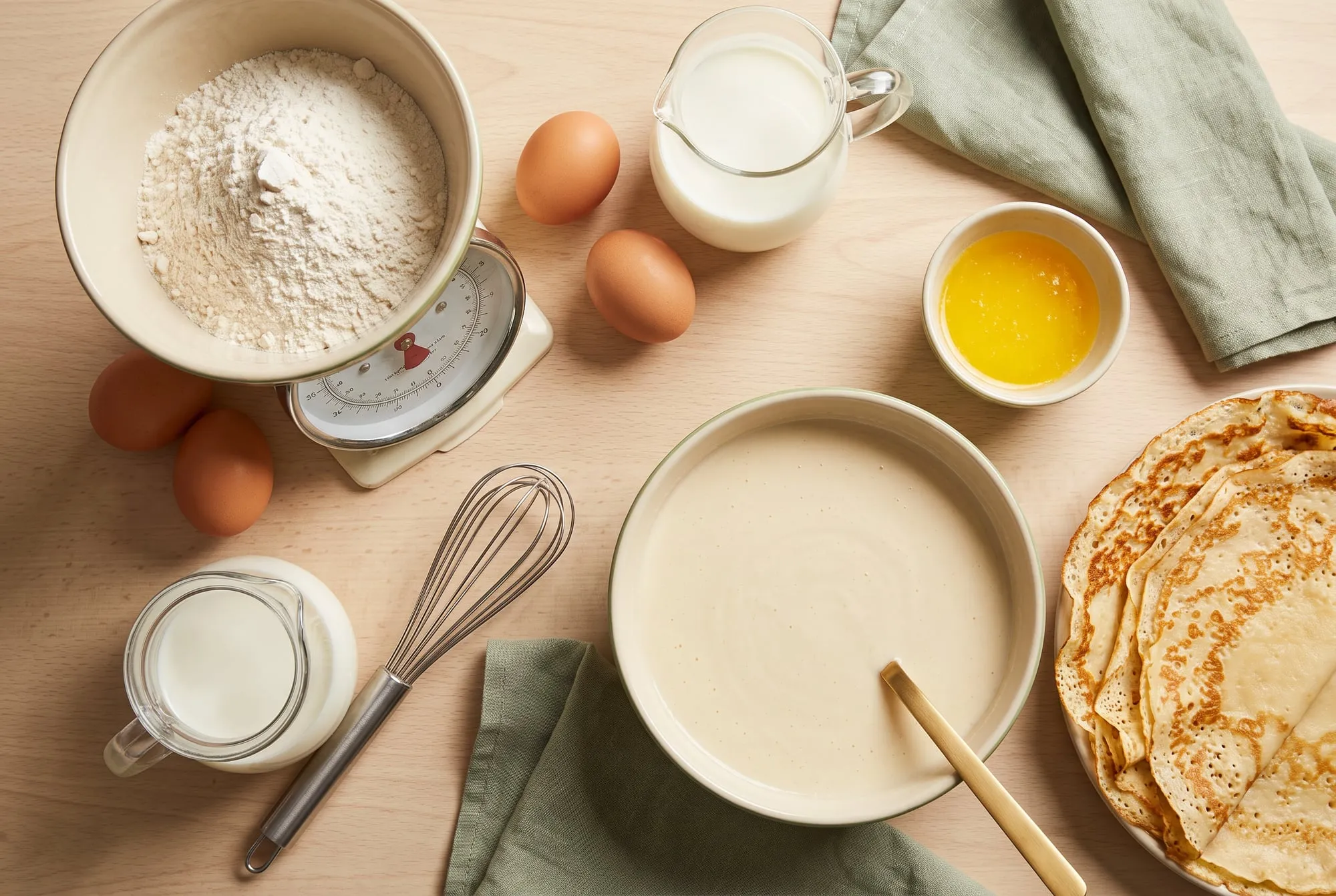
Crepe Batter Ratio: How Much Flour, Eggs and Milk (Cups and Grams)
The crepe batter ratio in cups and grams, a scaling chart from 1 to 4 eggs, how thick crepe batter should be, and how to fix batter that's too thick or thin.
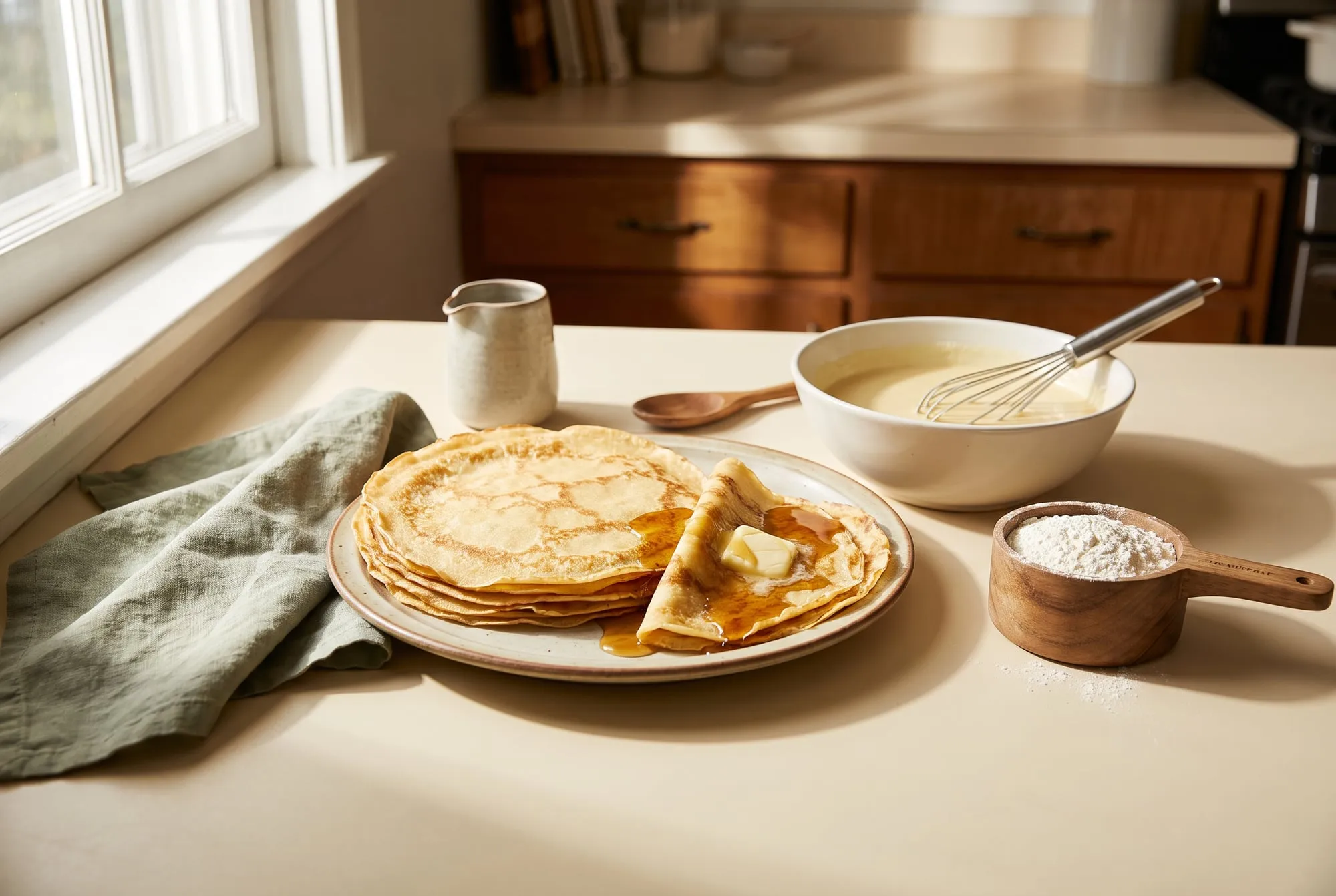
How to Make Crepes with Pancake Mix
Easy pancake mix crepes: whisk 1 cup pancake mix with 1 egg and about 1 cup milk until thin. Ratios for complete and regular mixes, plus tips.
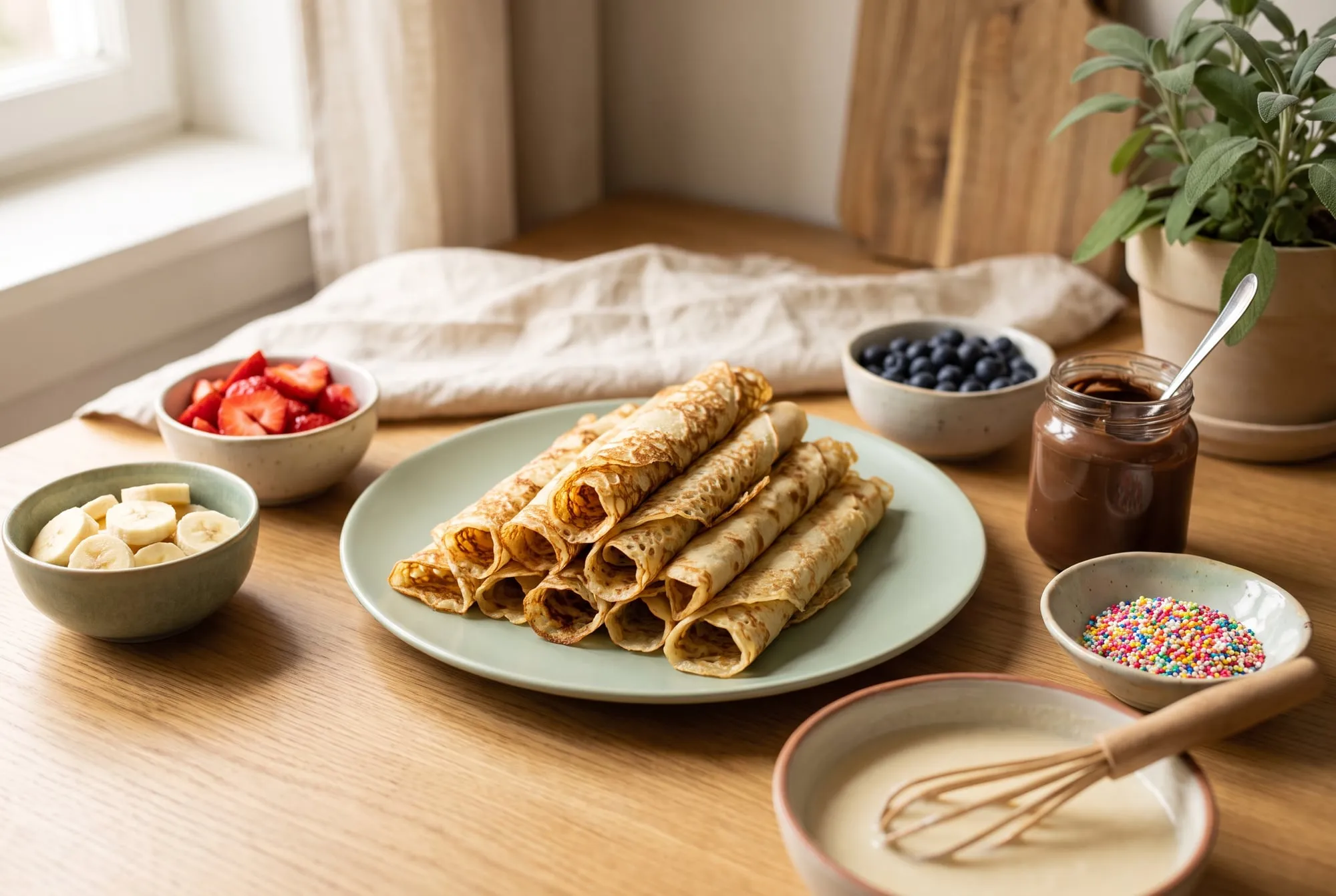
Making Crepes with Kids: Jobs by Age, Safety and an Easy Batter
How to make crepes with kids: a forgiving kid-friendly batter, jobs for every age, stove safety, a toppings bar and notes on serving crepes to toddlers.